
Case Study
Guardian Lock — Access, Reimagined
Making entry invisible, secure, and humane.
A compact access control system designed to eliminate queues, stop badge misuse, and reduce compliance friction. Guardian Lock blends rugged hardware with smart verification so workers move through the gate quickly, safely, and with confidence.
Fast entry flow
Dual verification
Field-ready hardware
Origin
Where it started
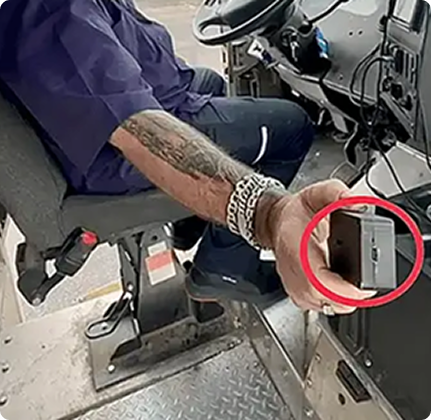
A construction site manager brought us a frustration that felt small but costly: every morning, site access turned into a bottleneck. Shared badges, slow security checks, and constant paperwork were eating into productive hours before the day even started.
The brief was crisp: build an entry system that feels effortless for legitimate workers, resists misuse, and survives the realities of a live industrial environment without constant support.
Problem
The design challenge
The challenge was not feature overload. It was operational trust under pressure.
Identity integrity
Confirm that the person at the gate is the actual worker, not someone using a swapped badge.
Real-world conditions
Handle helmets, face coverings, dust, rain, power fluctuations, and harsh day-to-day use.
Serviceability
Make the system predictable and easy to maintain when issues happen in the field.
We needed to combine industrial durability with intuitive behavior. The system had to disappear into the routine for honest users while staying difficult for bad actors to exploit.
System Architecture
Security that feels invisible
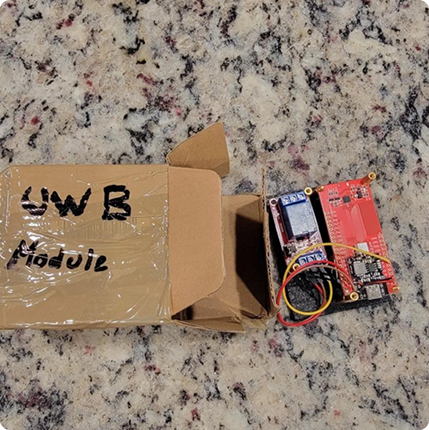
Guardian Lock uses dual validation: a personal credential such as a card or token is paired with a live face-matched check. That second layer runs quietly in the background so verified workers keep moving, while suspicious attempts are flagged and logged without bringing the whole entry flow to a stop.
This approach removes the single point of failure created by lost or shared badges and turns the gate into a dependable service rather than an obstacle.
Core Idea
Simple behavior outside. Strong verification inside.
Guardian Lock was designed so workers do not have to learn a new ritual. Swipe, verify, enter. Behind that calm interaction is a layered system built for identity assurance, hardware resilience, and clean auditability.
Engineering
Engineering the stack
Mechanical
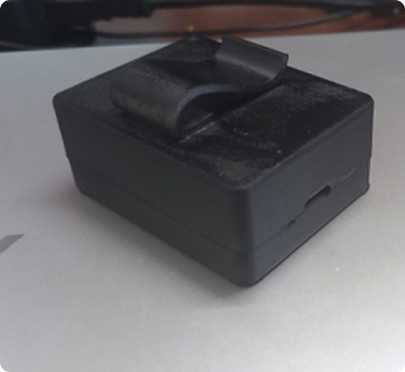
- Rugged enclosure with IP66-rated sealing
- Tamper sensors and secure mounting points
- High-torque motor drivers for reliable gate actuation
Electronics
- Modular ECU with separated logic and actuation power domains
- Surge protection and power smoothing for unstable site feeds
- Watchdogs and fail-safe relays for predictable behavior
Firmware & Edge Logic
- Fast edge verification tolerant of helmets and masks
- Parallel processing for swipe detection and identity checks
- Safe remote updates with rollback capability
Systems
- Cloud dashboard for logs, health telemetry, and audit trails
- Offline-first local cache when network connectivity drops
- Fleet visibility for operators managing multiple entry points
Validation
Prototyping and testing
We prototyped aggressively and forced failure on purpose. The goal was not just to prove the happy path, but to understand how the system behaves under real operational stress.
Testing covered high-throughput entry simulations, difficult lighting and RF conditions, thermal cycling, environmental exposure, power loss, jammed gate scenarios, and spoofed badge attempts.
Deployment
What the pilot revealed
Faster mornings
Queue times dropped noticeably during peak arrival windows at a busy New Jersey worksite.
Less misuse
Badge-sharing incidents fell to near zero because duplicate attempts were identified immediately.
Easier maintenance
Modular boards and tactile connector layouts let site crews replace parts in minutes instead of waiting on specialist service.
Operators described the experience as smart but unobtrusive. That was the right signal: the system improved control without adding ceremony to the workday.
Outcome
A stronger gate and a smoother workflow
Guardian Lock proved a simple thesis: when security is designed around human workflows, it becomes invisible to compliant users and highly visible only when something is wrong.
Beyond the raw numbers, the deployment improved trust between managers and crews by reducing friction, cleaning up compliance records, and making entry behavior feel consistent every day.
~45%queue time reduction during morning peaks
68%fewer maintenance tickets in the first six months
2 weeksto reach near-universal site acceptance
Reflection
Security is a service, not an obstacle
This project reinforced a core belief: the best security systems do not announce themselves. They quietly make work easier, safer, and more reliable. Guardian Lock earned its place by being maintainable, predictable, and human-aware.
“If a system frustrates the user, it fails its purpose. Design should reduce friction — even in security.” — Project Lead
Let’s build
Share your idea now
Need a secure system that works in the real world?
We design hardware-software products that stay reliable under pressure and still feel simple to use.